ANZ’s Personalisation Channel Strategy
With ANZ's personalisation capability growing, there was genuine appetite across the business to do more. What was missing was a common foundation for how we actually communicate with customers, a shared framework for what good looks like across channels.
This project was built to create that.
What follows is a brief snapshot of the discovery. For a full view of the program, feel free to give the Figma link at the bottom a browse.
To define a data-driven channel strategy for personalised messaging that delivers the right message, through the right channel, at the right time—driving engagement, experimentation, and measurable results.
The mission
Core principles
Program objectives
Customer centric
Communication should be personalised to the customers’ needs and preferences, and respect the customers time by not interfering with the tasks they were trying to complete.
Relevance
Messages should reflect a customer’s current situation, past interactions and activity and tailored to their interests.
Value driven
Every message regardless of type should present some value to the customer. Whether it be keeping their money safe, more suitable products and offers or educational content.
Data driven
Data should inform customer communication. Recent, relevant and respecting customer preferences.
Timeliness
Right time, right place. Messages should be delivered in the right moment to maximise effectiveness.
Consistency
One brand, one voice. Communication should reflect a single brand and tone of voice regardless of channel or application.
Control
Customers can choose what they want to see and how they want to see it.
Measure and iterate
While this framework will guide placement and opportunity, it will evolve as our customer needs and wants to do. We will use data to iterate and adapt.
Analyse, test, analyse and iterate
The Plan

Phase 1 - Discovery
This phase will focus on establishing the foundation of our framework, guided by insights from research and testing. We will assess current capabilities to identify key opportunities, while engaging stakeholders to help shape objectives, surface core challenges, and set clear priorities for the work ahead.
Phase 2 - Customer expectation
This phase will aim to explore customer expectations and preferences for messaging through multiple rounds of discovery research.
Due to time and resource constraints, we instead leveraged existing insights from ANZ, Suncorp, and market sources such as Finalta, RFI, Deloitte, Accenture, ABA, Forrester, and Publicis Sapient.
Phase 3 - Performance analysis
Analyse Adobe Analytics data to uncover performance patterns and outcome variances, alongside Below the Line reporting to assess specific impacts. By combining these findings with insights from earlier phases, we aim to identify gaps between what customers say they experience and how they actually behave within our channels.
Phase 4 - Targeted experiments
The final phase will focus on uncovering opportunities limited by current data or gaps in understanding the customer experience. The aim is to generate insights that inform new test-and-learn scenarios, helping us continuously improve and evolve our approach.

Identified pain points & opportunity insights

Phase one findings
Identified pain points
No consistent approach to channel application or measurement.
Multi-channel measurement was slow, and individual channel attribution was hard to pin down.
Teams often reached for the channels they knew, rather than the ones best suited to the customer or the message.
Heavy use of Level 1 nudges was starting to cause fatigue, and diminishing returns.
Different channels ran on different processes and engagement models, with nothing tying them together.
Opportunity insights
How might we make the process of deciding on a channel simpler, and aligned across projects?
How might we better understand ideal message frequency?
How might we align on channel priority and message placement?
How might we create consistency in how we measure and report, where it's appropriate to?

The Channel Prioritisation Framework
Prioritisation
Four stages, built to take a message from "we should probably send this" to a placement decision that's actually defensible.
Core channel selection
Identify the most effective channels for a message, weighing reach against engagement, and pairing channels with the outcome you're after.

Message priority by type
Twenty four message types, each assigned a priority level based on urgency and actionability, with a clear definition and example for each.

Placement alignment
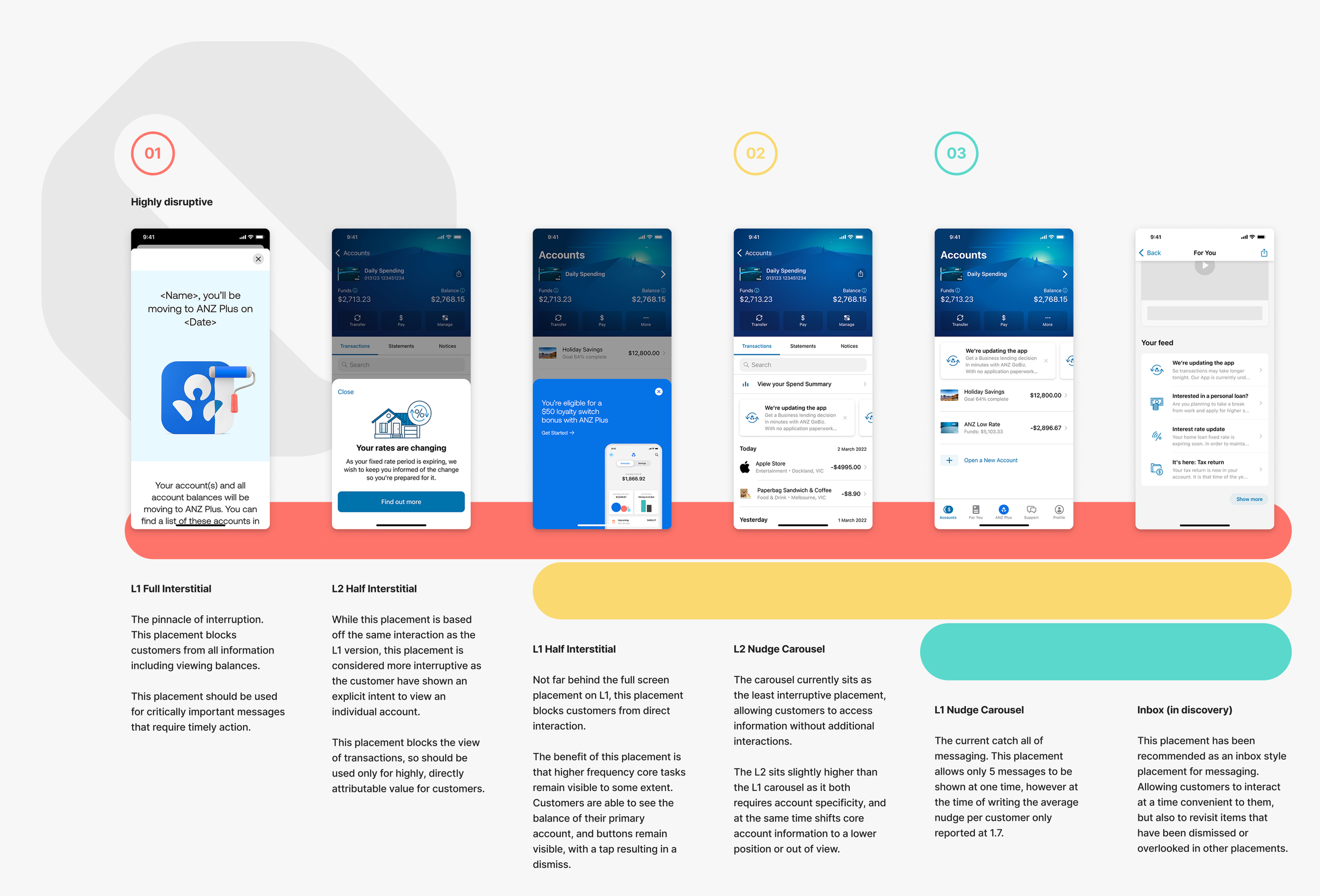
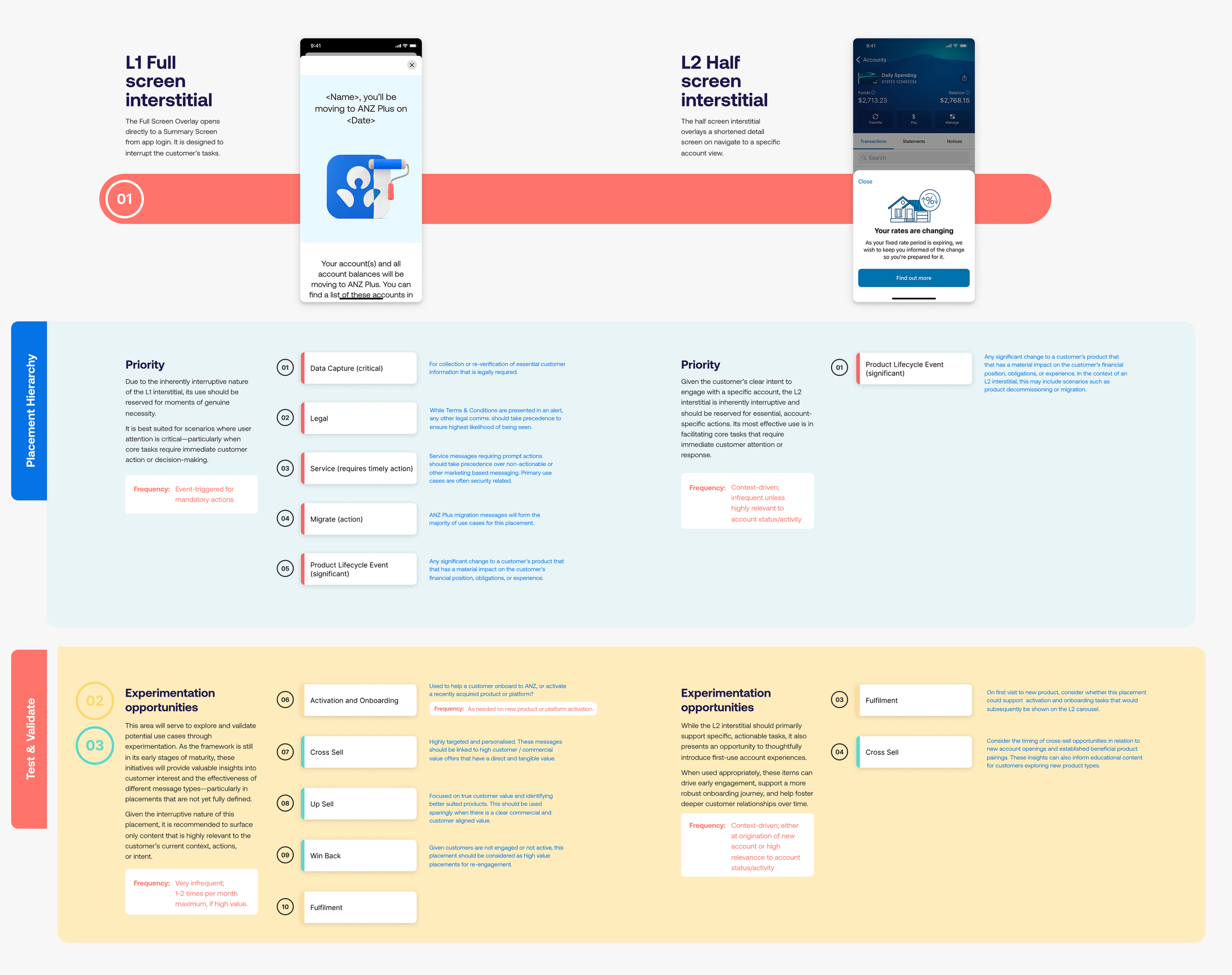
Every available placement mapped to a level of criticality, so a high-priority message doesn't end up buried in a low-priority spot.

Placement prioritisation
A full view of every placement by channel: which message types belong where, how they're prioritised, and how often they should appear.

Recommendation
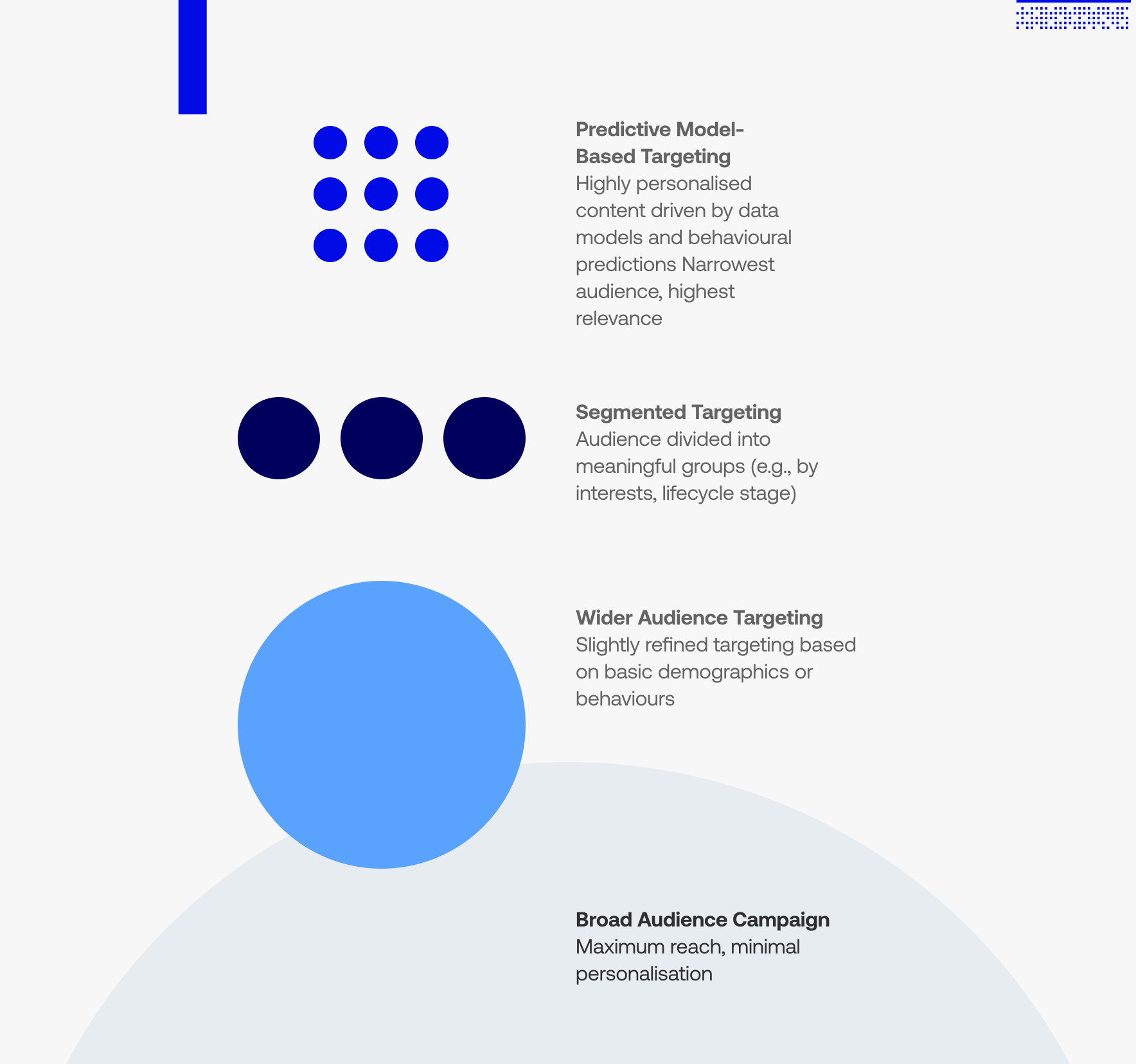
We should look to evolve our campaign approach to treat personalisation as a standard extension of broader campaign activity, rather than an exception. This means that when defining a campaign, we begin with a general audience version and then systematically layer in personalised variants based on specific cohorts, behavioural variables, or qualifying attributes.
It's a shift that sharpens relevance without giving up reach, and it gives us a way to manage message fatigue by matching the channel to the moment: eDMs for broad outreach, authenticated channels like the app reserved for messaging where we actually have the context to personalise well.
What now…

Check out the entire discovery pack below

Here’s the
deep stuff